Blog · July 22, 2026
Two farmers markets, one honest answer: how a soap maker used SkyCanvas analytics to pick where to book next season
Wren makes small-batch goat milk soap and sells at two Saturday markets. Same table, same signage, wildly different results. Here is how a branded short link, a QR on every bar, and thirty days of SkyCanvas analytics settled the argument.
Wren Halloway runs Pinebrook Goat Milk Soap out of a converted dairy shed in western North Carolina. Two goats, one kitchen, a lot of curing racks, and a Saturday routine that has her at a farmers market by seven in the morning with the same folding table, the same chalkboard, and the same lineup of shave bars and lotion sticks.
The problem is that she has been splitting her Saturdays between two markets. One is the big downtown Asheville market, loud and tourist-heavy. The other is a smaller mountain-town market about forty minutes north, quieter, more regulars. Her sister keeps telling her to drop the small one. Her partner keeps telling her to drop the big one. Both of them are certain. Wren is not.
Booth fees are due for next season, and Wren needed something better than a hunch. So she gave every bar of soap the same little kraft band with a QR code and a short URL on it, and she let thirty days of scans and clicks do the talking.
1. Setting up the Pinebrook profile
The first thing Wren did was fill in her SkyCanvas profile so every link and QR she made would carry the right context. Business name, tagline, what she actually sells, and who she sells to. Nothing fancy, just enough that she was not staring at a blank workspace.
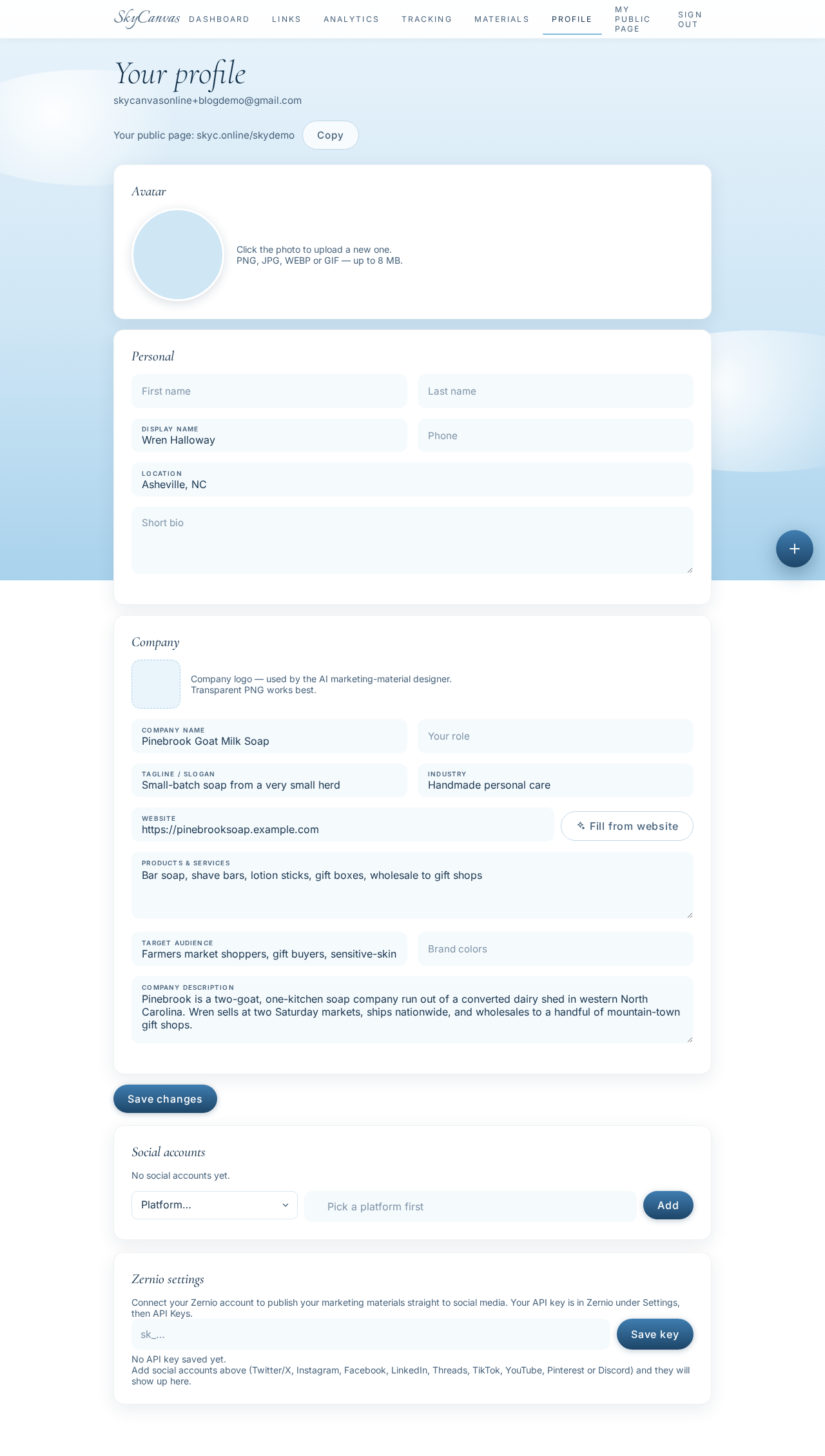
Having the audience field written out (“farmers market shoppers, gift buyers, sensitive-skin customers, small boutique owners”) turned out to be more useful than it looked. Later, when she was writing link descriptions and thinking about what to put on the kraft bands, she kept coming back to that sentence.
2. Creating one short link for every bar
Wren did not want a different QR for every scent. She wanted one link, on every bar, that sent people to the whole shop. That way she could track it as a single number and not spend her Sunday nights doing spreadsheet math.
She opened the new short link form, pasted her shop URL, gave the link a title and a short description, and picked a custom slug she could actually say out loud at a booth: pinebrook-shop.
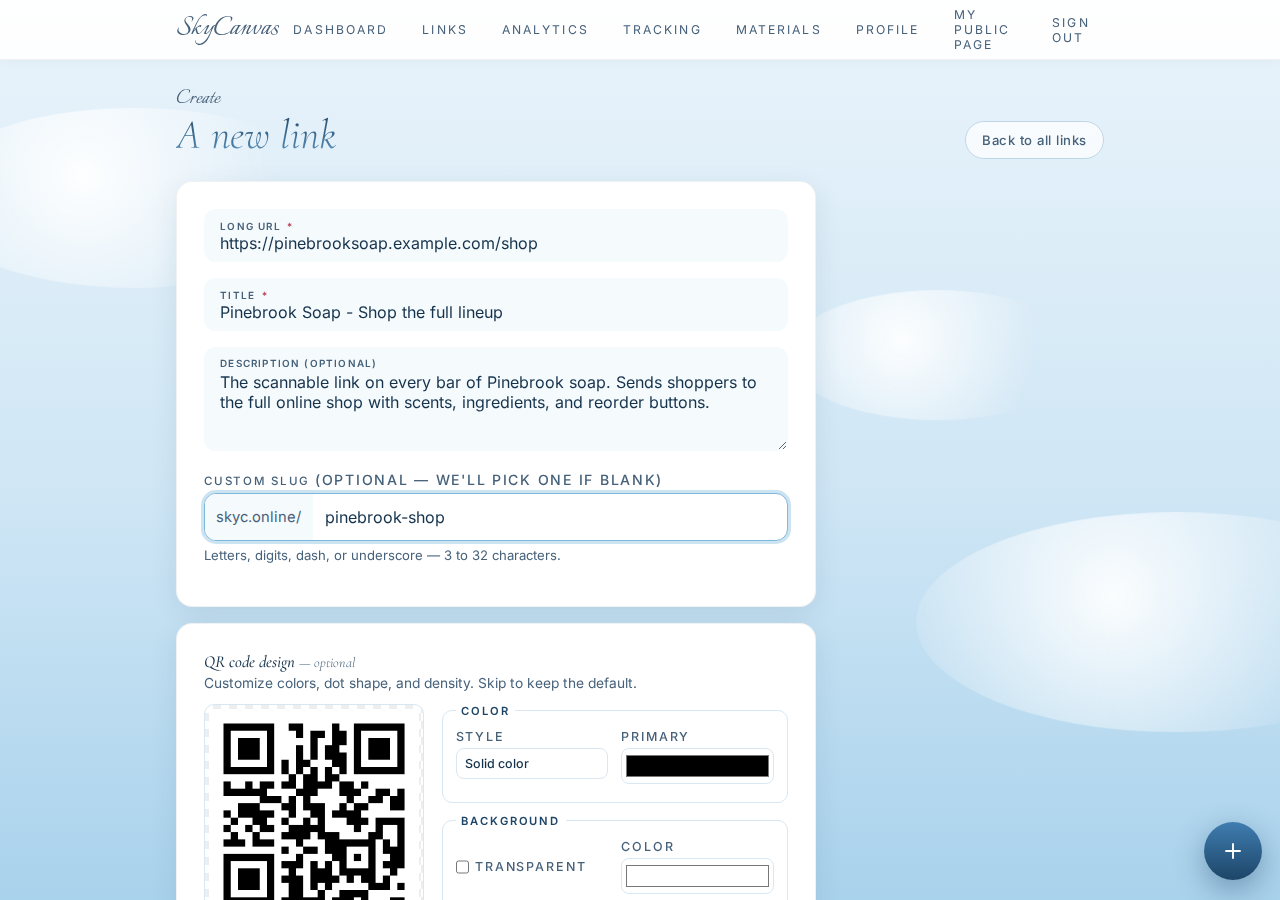
The live QR preview on the right meant she could see exactly what would end up printed on her kraft bands before she committed to anything. No surprises at the print shop.
3. The link, ready to hand out
Once the link was saved, SkyCanvas gave her the short URL, the destination it pointed to, and a QR code she could download at whatever size she needed.
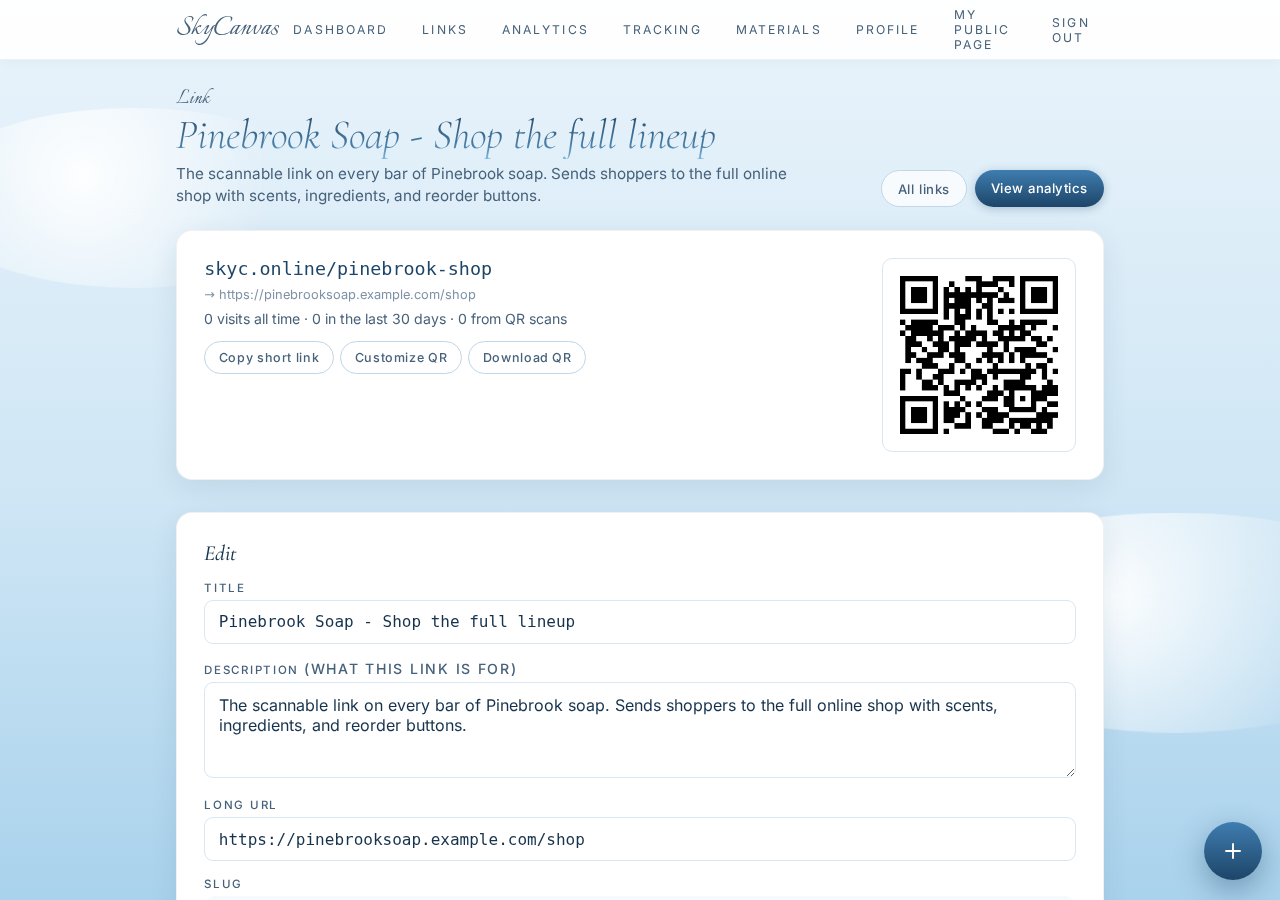
The short URL she settled on was skyc.online/pinebrook-shop. Short enough to read off a chalkboard, easy enough that someone could type it into a phone one-handed while holding a bar of soap and a coffee.
4. Making the QR look like Pinebrook
The default black-on-white QR works fine. But Pinebrook has a look, mossy green and soft sage, and Wren wanted her kraft bands to feel like the rest of her packaging. SkyCanvas let her drop in her brand greens on the QR modules and keep a clean white background so scanners would still read it in low market-morning light.
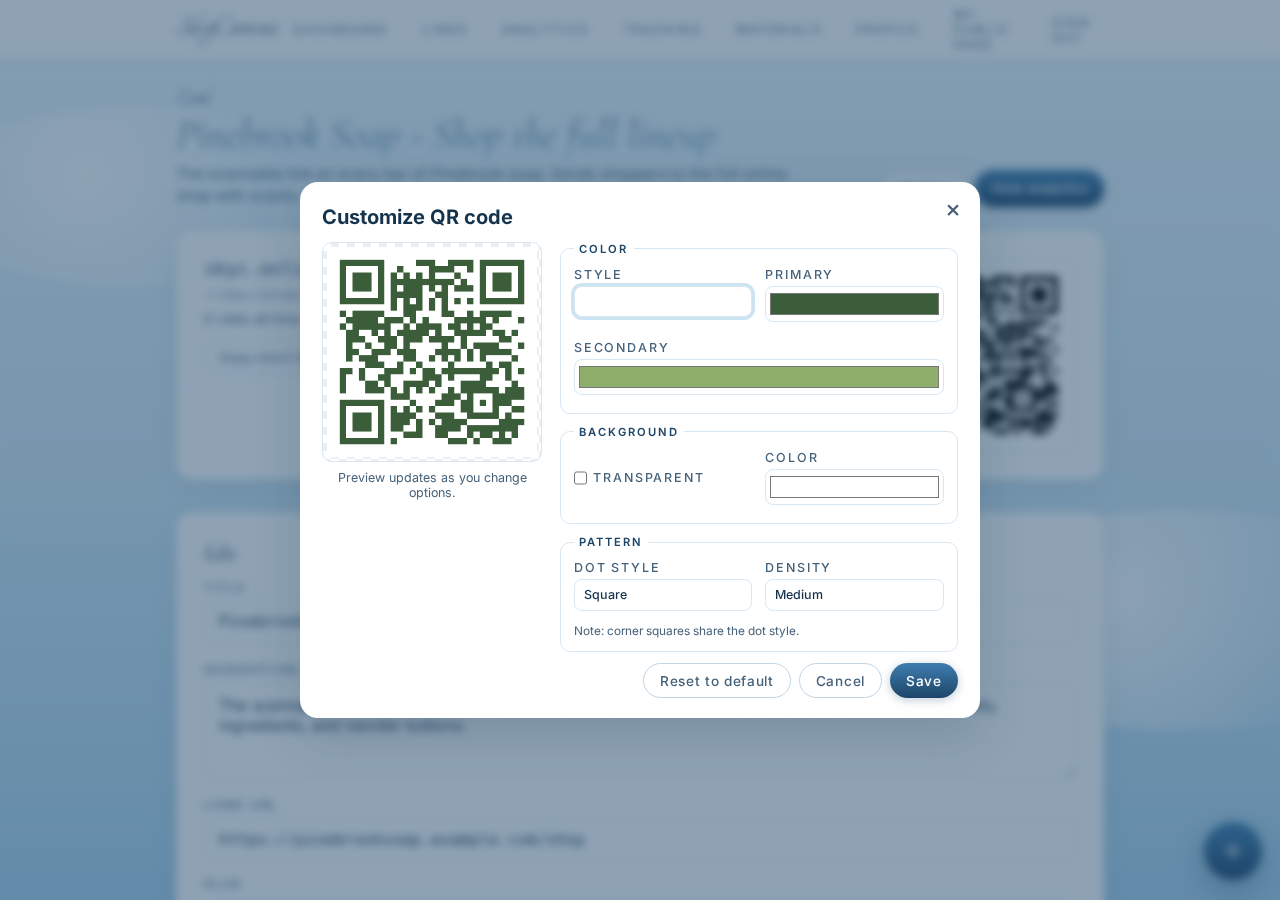
She printed a test bar, walked outside, and scanned it with a cold phone and cold hands. It worked on the first try. Good enough. She sent the file to her local print shop and had two hundred kraft bands back in four days.
5. Living with the dashboard
Wren is not a dashboard person. She grew up on paper ledgers and she still keeps a paper ledger. But she checked the SkyCanvas dashboard every Sunday morning with her coffee because the numbers were right there without her having to log into anything else.
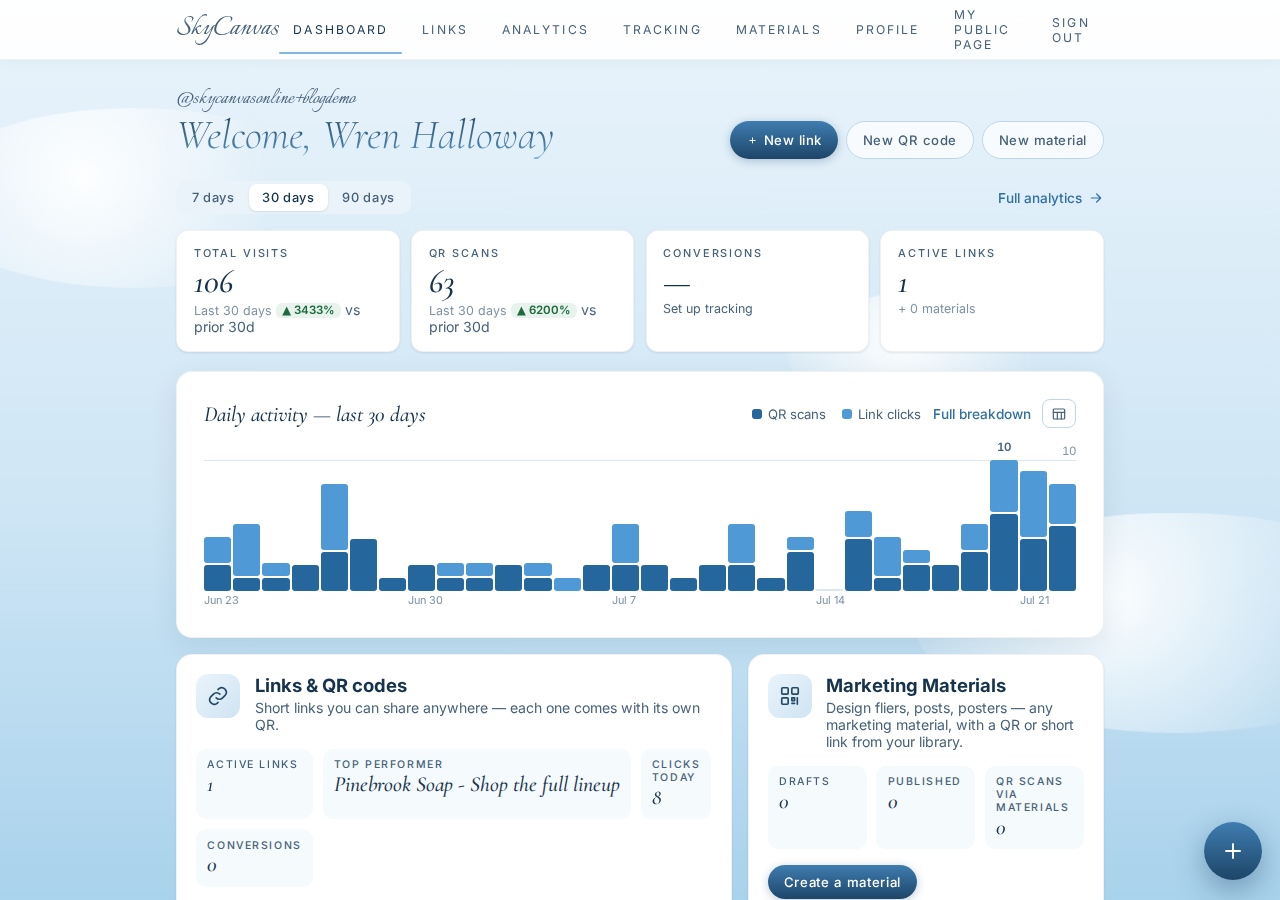
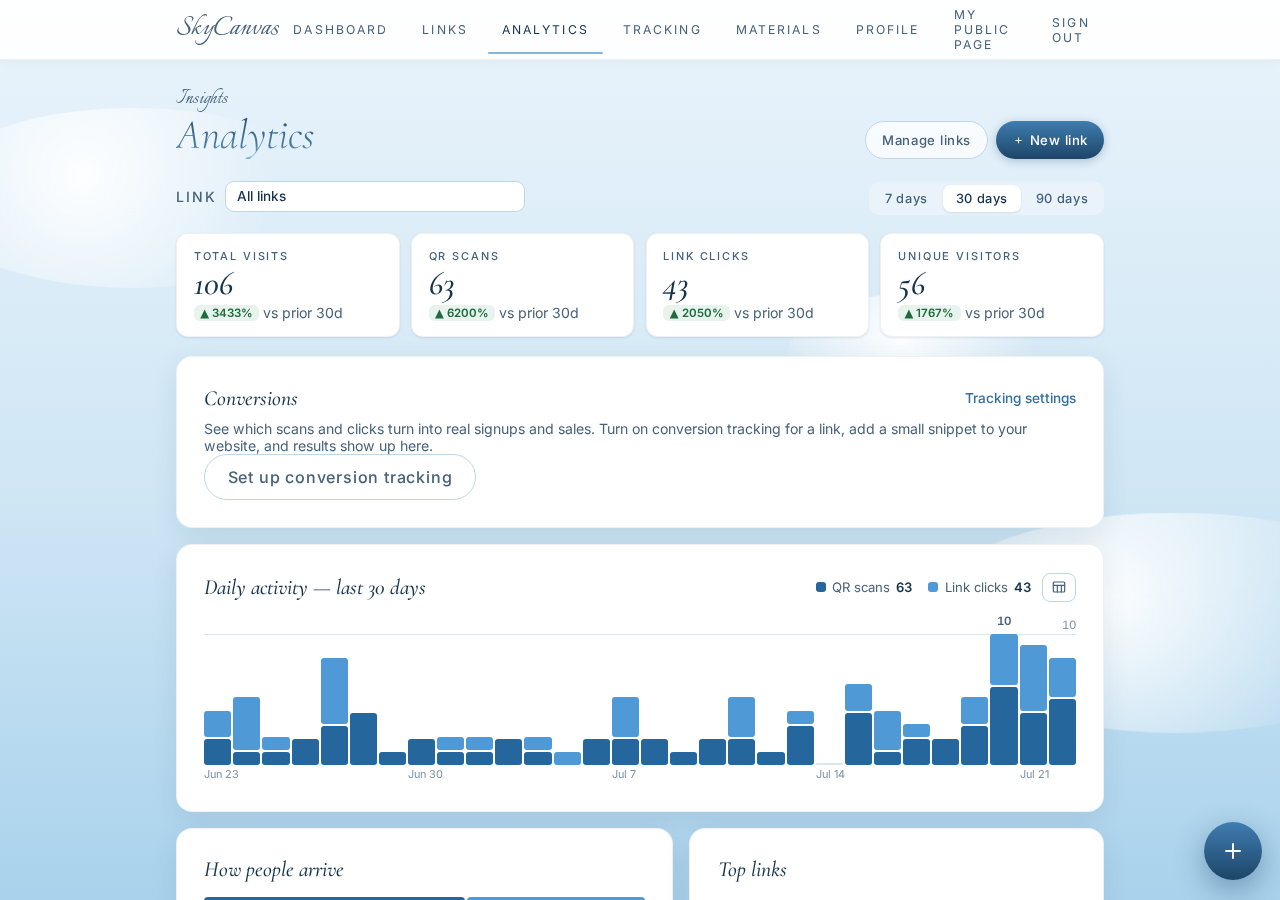
The KPI tiles at the top were the fast read. Clicks, scans, conversions, total links. The daily activity chart underneath was the interesting one, because you could see the Saturday spikes clearly. Every week, a bump. Some bumps were bigger than others, and it did not take long before Wren could tell just by looking whether it had been a downtown Saturday or a mountain-town Saturday.
6. The analytics page, and the honest answer
The dashboard tells you the shape. The analytics page tells you the story. Wren opened it after four Saturdays at each market and looked at per-link clicks, QR scans over time, and the device breakdown.

The downtown market brought more scans on the day. Big number, felt great. But the analytics also showed that most of those scans stopped at one page view and never came back. Tourist traffic, curious, not buying.
The smaller mountain-town market brought fewer scans, but the follow-up clicks over the next three days were noticeably higher, and the conversions on the shop lined up with those same days. People were scanning the bar at market, taking it home, and reordering during the week. That was the answer she needed.
What changed for Pinebrook
Wren renewed her booth at the smaller market for the full season and dropped the downtown market to every other Saturday instead of every week. That gave her back four Saturdays a year of curing and shipping time, and it protected the customer base that was actually reordering.
She also learned that the kraft band with the QR is doing real work between markets, not just at the table. That changed how she prices gift boxes and how many spare bars she brings to wholesale meetings.
If you sell at markets, at fairs, or anywhere your customer might not buy the first time they meet you, a branded short link and a QR on the product are the cheapest research you will ever run. You can set yours up in about ten minutes at skycanvas.online/register and start collecting real numbers next Saturday.
Pinebrook Goat Milk Soap is a fictional business we created to show a real SkyCanvas workflow. Every screenshot is real, captured live while writing this guide.